Professional Dog Training Freeport FL decoded: methods every owner should know
Wiki Article
Master the Art of Dog Training: Proven Approaches for a Mannerly Pooch Companion
Dog training is a nuanced process that requires an understanding of canine behavior. Effective communication is important for developing trust and establishing borders. Lots of owners overlook the significance of socializing and standard commands, which lay the structure for a well-behaved dog. Favorable reinforcement plays a vital duty in this trip. However, obstacles often develop. Discovering proven techniques can lead to a deeper connection between proprietor and dog. What might those methods require?Understanding Dog Habits
Comprehending canine habits is necessary for efficient dog training (Dog Training Freeport Florida). Canines interact via body language, articulations, and various behaviors, making it crucial for instructors to analyze these signals properly. For instance, a wagging tail might suggest exhilaration, while a lowered head can indicate submission or worry. Acknowledging these hints aids trainers address issues and promote a favorable knowing environment. Furthermore, recognizing the dog's reactions and natural propensities, such as their pack attitude, boosts the training procedure. Pet dogs flourish on routine and consistency, so establishing clear limits and assumptions is important. By comprehending these behavior traits, trainers can create customized techniques that resonate with the specific dog's needs, ultimately leading to a more harmonious relationship in between the dog and its proprietor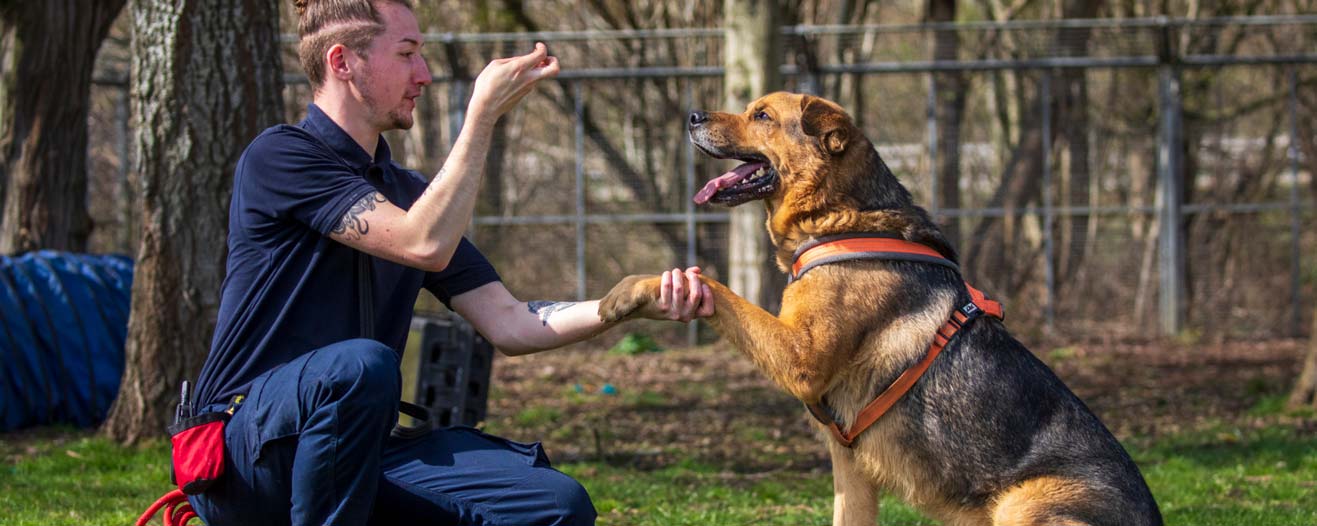
The Significance of Socialization
Socializing offers as a cornerstone of efficient dog training, affecting a canine's actions and flexibility in numerous environments. Through direct exposure to various individuals, pets, and settings, dogs find out to develop and browse social interactions confidence. This procedure lowers the probability of fear-based responses, hostility, and anxiousness, fostering a well-adjusted animal. Early socializing, ideally during the crucial developing duration, is vital for forming a dog's individuality and feedbacks to new experiences. Involving in favorable experiences assists pet dogs connect unknown situations with convenience and safety and security, advertising tranquil behavior. Additionally, well-socialized pet dogs are often more enjoyable friends, as they are most likely to respond positively in public rooms. Inevitably, correct socializing lays the structure for a delighted, well-behaved canine buddy.Basic Commands Every Dog Need To Know
A well-socialized dog benefits significantly from mastering fundamental commands, which are fundamental to efficient communication between family pet and proprietor. Essential commands include "rest," "stay," "come," "down," and "leave it." Each command serves a particular purpose, helping in security and control. For example, "rest" can stop getting on visitors, while "remain" keeps a dog in place, guaranteeing they do not roam into risk. The command "come" is essential for recall, allowing owners to call their dog back securely. "Down" urges calmness, and "leave it" prevents undesirable behaviors, such as scavenging. Constant method of these commands fosters a solid bond and shared understanding, inevitably causing a well-behaved canine companion that boosts the total pet-owner partnership.Favorable Support Techniques
Positive support techniques play an important duty in effective dog training. By utilizing incentives and treats, trainers can motivate preferred habits, while remote control training offers an accurate method for noting those behaviors. Consistency in applying these strategies guarantees that dogs discover and keep commands extra successfully.
:strip_icc()/here-you-go-human--you-can-have-my-paw-912145654-35ddb8b11c8b4b638dc83e5bb2a013fe.jpg)
Incentives and Deals with
While lots of dog proprietors seek reliable training techniques, using benefits and treats as positive reinforcement methods has verified to be one of one of the most successful strategies. By supplying treats, appreciation, or various other rewards, proprietors can encourage wanted behaviors in their canine friends. This technique takes advantage of on the dog's all-natural instinct to look for enjoyment and authorization. Timing is vital; rewards should be provided promptly after the wanted behavior to create a clear association. Selection in treats can likewise keep a pet's passion and motivation throughout training sessions. In addition, making use of benefits promotes a positive bond in between the dog and proprietor, making learning pleasurable. In general, incorporating incentives and treats successfully can lead to a well-behaved and delighted dog.Clicker Training Advantages

Consistency Is Trick
Uniformity plays an essential role in the efficiency of favorable reinforcement methods in dog training. When trainers apply benefits, such as treats or praise, reliably after wanted behaviors, dogs swiftly discover to connect these activities with favorable end results. This association reinforces their motivation to repeat those behaviors. Irregular reinforcement, on the other hand, can perplex canines, causing unpredictability regarding what activities evoke incentives. To develop clear communication, fitness instructors need to utilize the exact same commands and hints continually. Furthermore, strengthening habits quickly after they take place improves understanding and retention. With time, this predictable pattern promotes trust fund and a stronger bond in between the dog and instructor, eventually resulting in a well-behaved canine companion. Uniformity is, hence, basic to effective dog training.Consistency Is Secret
When training a dog, keeping a regular approach is important for achieving effective results. Pets thrive on routine and clarity, which helps them comprehend assumptions and desired habits. A fitness instructor must stick and develop clear commands to them, making sure that every member of the family uses the very same terms and signals. In addition, corrections and incentives need to be used evenly; incongruities can confuse the dog, leading to irritation for both the owner and the family pet. By establishing a foreseeable training routine and sticking to it, progress can be measured much more precisely. Eventually, uniformity cultivates trust fund and enhances the bond between the dog and fitness instructor, producing a strong structure for a mannerly canine buddy.Taking Care Of Typical Behavioral Issues
How can dog proprietors efficiently deal with common behavioral problems that occur throughout training? Recognizing the origin creates of habits such as barking, chewing, or jumping is essential. Owners ought to observe their dog's contexts and triggers to much better understand these activities. Ideal and constant support strategies, such as favorable reinforcement, can aid redirect unfavorable habits. Furthermore, setting clear borders and utilizing commands continually cultivates understanding. For instance, when a canine barks excessively, owners can train them to react to a "silent" command. Perseverance is vital; behavior modification takes time. Seeking professional aid from an instructor may additionally be valuable when problems continue. Ultimately, addressing behavioral issues early can result in a much more unified partnership in between dog and owner.Constructing a Solid Bond Through Training

Although training might typically be checked out as a means to correct behavior, it additionally acts as an effective opportunity for dog owners to develop a much deeper connection with their animals. Taking part in consistent training sessions cultivates trust and communication between the dog and proprietor. As canines find out new commands and skills, they obtain self-confidence, while owners discover to understand their animal's one-of-a-kind character and requirements. Positive support techniques, such as treats and appreciation, enhance this bond, urging pets to connect training with enjoyable experiences. Through regular communication throughout training, both owner and dog establish a common regard and understanding, enhancing their connection. Ultimately, this strong bond not only brings about a well-behaved canine companion yet additionally enriches the overall friendship shared.
Often Asked Concerns
The length of time Does It Require To Train a Dog Efficiently?
Training a canine successfully commonly takes numerous weeks to months, depending upon the dog's age, type, and the complexity of the desired behaviors. Consistency, perseverance, and favorable reinforcement play vital duties in the training procedure.Can I Train an Older Dog or Simply Puppies?
Yes, older canines can be trained equally as successfully as pups. While they might need various approaches and patience, with consistent method and positive reinforcement, older dogs can learn brand-new behaviors and commands.What Should I Do if My Dog Declines to React?
If a canine rejects to react, the proprietor needs to examine the environment for distractions, utilize positive reinforcement, warranty consistent commands, and consider the dog's health and training history, seeking expert help if required.Are There Specific Types That Are Easier to Train?
Particular types, such as Border Collies, Poodles, and Labrador Retrievers, are often thought about simpler to train as a result of their knowledge and desire to please. Consistent techniques and positive reinforcement boost training success throughout all breeds.How Do I Choose the Right Training Equipment and Tools?
Choosing the right training devices and equipment includes examining the dog's personality, training, and dimension goals. Investigating various alternatives, seeking recommendations, and taking into consideration the dog's convenience and security are essential steps in making an informed decision.Socialization serves as a foundation of effective dog training, influencing a pet dog's habits and versatility in numerous atmospheres. Clarity in interaction boosts the efficiency of dog training, and remote control training exhibits this concept via its organized technique. Training might usually be watched as a method to fix actions, it likewise serves as an effective possibility for dog proprietors to develop a deeper connection with their animals. Training a dog successfully commonly takes a number of weeks to months, depending on the dog's age, type, and the intricacy of the wanted habits. Picking the ideal training devices and devices involves assessing the dog's temperament, training, and size objectives.
Report this wiki page